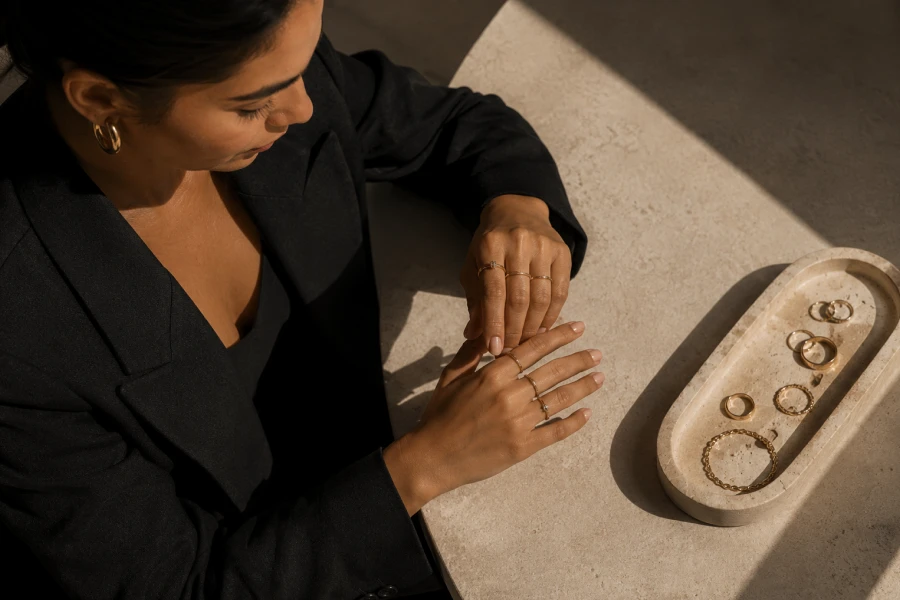
Layered jewelry becomes convincing when it responds to the hand instead of following a fixed diagram. How to layer rings begins with observing finger length, knuckle width, movement, and everyday habits. These details influence which proportions feel balanced and which placements become uncomfortable. Longer fingers may support several slim bands, while shorter fingers often benefit from clearer spacing. Wider knuckles can make adjustable placement or varied sizing especially useful. Start with rings already worn often before introducing unfamiliar shapes. Thoughtful jewelry layering should enhance natural movement rather than make the hand feel decorated from outside. View the arrangement while resting, gesturing, and holding ordinary objects. Matching matters less than creating a rhythm that feels believable on your hand. Personal proportion turns general styling advice into a composition you can actually wear.
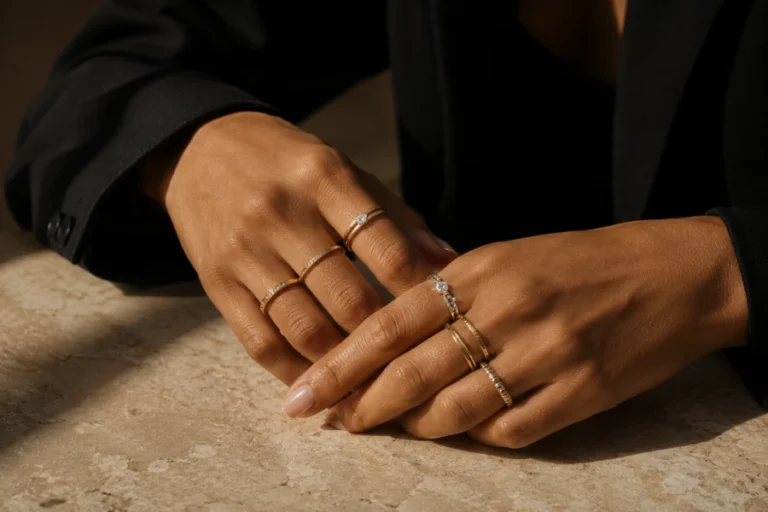
Hand shape is not a limitation, but it provides useful information about scale and spacing. Try rings at different heights rather than stacking everything tightly near the base. A midi ring can extend the composition vertically when lower space feels crowded. Broad bands may look cleaner when separated across fingers instead of layered together. Delicate pieces can create length, especially when one finger remains relatively open. Notice which joints flex most during typing, driving, or carrying objects. Place sharper settings away from areas that experience frequent contact. Photograph both hands because visual balance can differ between dominant and nondominant sides. Comfort should guide placement before any trend or symmetry rule. A responsive arrangement looks polished because it belongs naturally to the hand wearing it.
Contrast creates dimension when it appears in controlled pairs rather than everywhere simultaneously. Combine smooth with textured, narrow with wide, or geometric with softly curved forms. Choose one contrast as the main idea and keep other differences quieter. A polished signet beside a thin hammered band creates enough conversation without extra complexity. Repeating one metal or edge shape prevents the combination from feeling disconnected. This method supports a minimalist ring stack that still contains depth and personality. Avoid grouping several ornate settings together unless one clearly dominates the others. Similar visual weight across every piece can flatten the arrangement despite abundant detail. Controlled contrast helps each ring remain legible from a normal viewing distance. The result appears layered because relationships, not quantity, create interest.
Metals and textures can differ freely when one shared feature provides continuity. Repeat a finish, shape, gemstone color, or band width across at least two pieces. A two-tone ring can bridge warm and cool metals without looking like a forced compromise. Brushed surfaces soften strong color differences, while polished finishes increase brightness and contrast. Place harder stones carefully so they do not rub softer metals during movement. Keep heavily textured rings away from delicate pavé edges that may catch or scratch. Mixed materials should feel collected, but they still need practical compatibility. Test the arrangement for several hours before trusting it during travel or a long event. Visual experimentation works best when construction and wearability receive equal attention. A coherent stack can include many differences when those differences follow one clear logic.
Empty space functions like punctuation because it separates ideas and gives important pieces emphasis. Leave one finger bare or keep a visible gap between two areas of detail. This pause makes sparkle appear brighter and substantial bands feel more sculptural. Crowding every finger can reduce impact because the eye stops distinguishing individual choices. Negative space also improves comfort by limiting metal contact during ordinary movement. Use asymmetry to place weight on one side while preserving openness elsewhere. A bold index ring may need only a quiet pinky band across the same hand. On the opposite hand, one simple band can provide enough visual response. Space should look deliberate rather than unfinished, so repeat a small detail across the gap. Restraint allows the composition to breathe and makes every addition easier to evaluate.
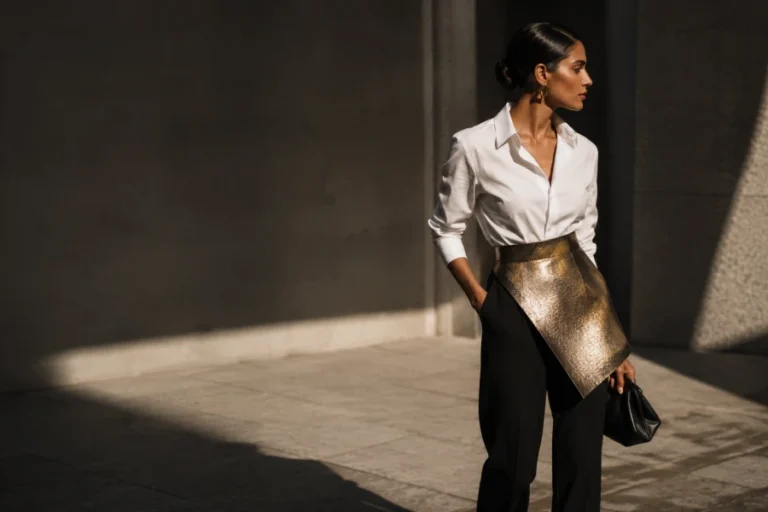
Clothing changes the appropriate intensity of layered rings, even when the jewelry collection stays consistent. Minimal outfits can support stronger scale, concentrated shine, or a vivid gemstone. Patterned or highly textured clothing often benefits from simpler bands and clearer spacing. Match the mood rather than copying every color or decorative detail. A crisp suit may welcome geometric forms, while soft knitwear can pair beautifully with rounded textures. Use a statement ring stack when jewelry should become the primary focal point. For quieter days, remove one substantial piece while preserving the same underlying arrangement. This creates continuity without making every outfit feel equally dressed. Jewelry should complete the clothing conversation, not compete with every existing detail. Flexible intensity makes a layered collection useful across more of your wardrobe.
Experimentation becomes cheaper and more accurate when it begins with rings already owned. Lay every piece on a neutral surface and group them by width, finish, shape, and color. Build several arrangements without wearing them, then test the strongest options on both hands. Photograph each version in natural light and review the images later. Distance often reveals imbalance that close inspection misses. Remove one ring from every crowded arrangement before deciding what the collection lacks. Revisit the principles behind intentional ring combinations before shopping for another connector piece. New purchases should solve a specific gap in scale, color, or comfort. This discipline prevents filler bands from creating more confusion than flexibility. Practice sharpens judgment until balance becomes easier to recognize immediately.


Leave a comment